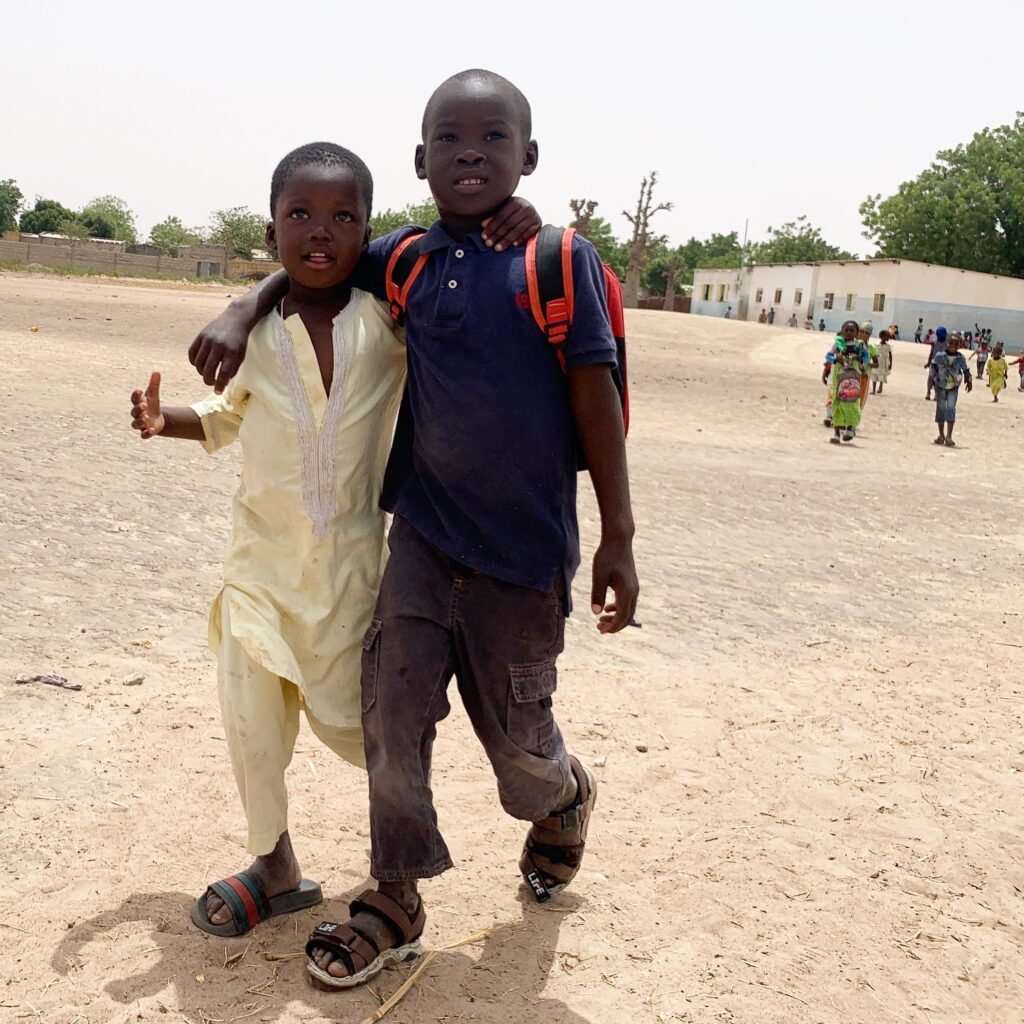
At the first primary school equipped with a Smart Kit in Senegal, the pass rate for the primary school leaving certificate rose from 31% to 77% the following year. The teachers were the same. The pupils were the same. A television was plugged in in the classroom, and the Ministry of National Education’s teaching content was shown from a USB stick.
What was done
| Deployment | Detail |
|---|---|
| Senegal | Primary and lower secondary schools equipped under the memorandum of understanding with the Ministry of National Education and the town of Sandiara (since 2021) |
| The Gambia | 147 Smart Kits in 122 primary schools, for UNICEF. Delivery, installation and teacher training completed in May 2026 |
What changes in the classroom
| Before | After |
|---|---|
| Lessons limited to daylight hours | Lessons possible at the end of the day |
| Blackboard and textbooks only | The ministry’s teaching videos on the television, the same as in Dakar |
| Teaching material copied by hand | Exam papers and handouts printed at the school |
| No computer | A computer and a television at the same time |
A teacher at an equipped school said: “You just put the USB stick in the television. Even I can do it, and I am not good with machines.”
What the teachers changed
The first Smart Kit model had been designed for health posts. Teachers asked for a battery that lasts longer, and the ability to run a television and a computer at the same time. Battery capacity was raised from 580 Wh to 864 Wh. The kit used today in The Gambia is the result of these requests.
The kit is portable. In the evening, the teacher stores it in a locked office. No panel on the roof, so no panel theft.
From one school to a programme
Before ordering, UNICEF visited equipped schools in Senegal and reviewed the results. The deployment in The Gambia followed. Teachers at the 122 schools were trained in the use of the kit, the television and the content on USB stick.